Tanning & Skin
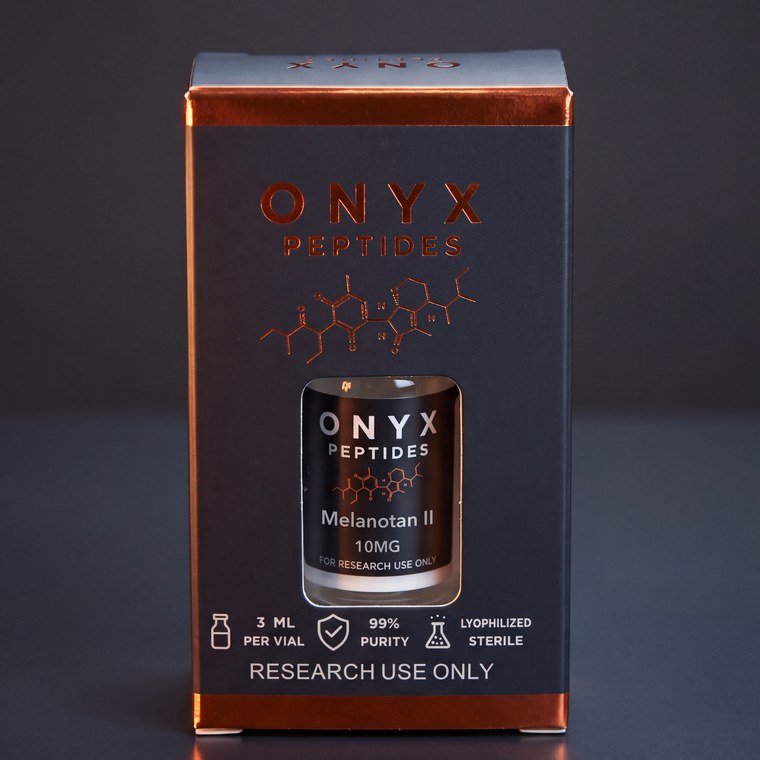
Melanocortin research peptides studied in pigmentation biology. This category covers Melanotan II, a synthetic cyclic analogue of alpha-MSH investigated for melanocortin receptor pharmacology and melanogenesis pathways in preclinical research.
Almost every element of its structure exists to make a short peptide survive: a lactam bridge locking the backbone into the conformation the receptor recognises, norleucine replacing methionine so there is no sulfur to oxidise, D-phenylalanine in place of L to resist proteolysis, and both termini capped against exopeptidases. Its defining pharmacological feature is that it is non-selective — an agonist at four of the five melanocortin receptors, which have distinct tissue distributions and distinct functions. That breadth is what makes it useful as a research probe and what makes its effects difficult to attribute to one receptor.
Two structural details have practical consequences. The tryptophan in the message sequence is the primary photodegradation target, which makes amber vials and protection from direct light proportionate here rather than precautionary. And the lactam bridge is the identity of the molecule: a linear peptide of the same amino acid composition has a mass 18 Da higher, since cyclisation is a condensation that loses water. Mass spectrometry distinguishes cyclic from linear unambiguously, which makes mass confirmation genuinely informative on this compound rather than a formality. Our storage and stability notes cover photodegradation.
Supplied as lyophilised powder at 99%+ HPLC-verified purity with independent mass-spectrometric identity confirmation. Batch-matched Certificate of Analysis available on request. This is a research reagent for in-vitro and laboratory use only — it is not approved for human use and is not intended for human consumption.